Here's a Prezi presentation it's all about the 22 narrative theories.
Sunday, 30 October 2016
Steve Neal's Theory of Repetition and Difference.
The next one is all about Steve Neal's Theory of Repetition

Propp's Character Theory
This is the first of 4 theories that we have looked at in Media. These will be presented using different presentation websites such as Prezi and Emaze. The first one is based on Propp's Character Theory.
Sunday, 16 October 2016
Film Classification
Every film has to be classified by what age can watch it for example a 10 year old can't watch a 15 rated film.
It is very important that film creators makes sure that the right age are watching their film otherwise it may not do as well or could be inappropriate for a younger audience.
BBFC
The BBFC are the British Board of Film Classification. They categorise films on what content it has and then gives it a age rating according to how appropriate it is for the certain age range. For example an 18 rated film would be a lot more graphic then a U rated film.
U - A U film should be suitable for audiences aged four years and over. Example Below.
Discrimination - There should be no discrimination used in U films, if there is then it is unlikely to be accepted as a U film.
Drugs - References to drugs must be either not in the film at all or used once or twice but if it is used frequently then it must be because of a educational reason.
Imitable behaviour - No dangerous or anti social behaviour which young children could copy can be used in U films.
Language - Hardly any bad language can be used
Nudity and Sex - there can be some occasional nudity but with no sexual content. Only kissing is aloud and references to that sort of behaviour are aloud.
Threat - things that could scare young children are not aloud, and if they are featured it must be very mild.
Violence - This should also be very mild, it is only acceptable if it is used in the right way e.g comedy reasons.
PG - General viewing, but some scenes may be unsuitable for young children.Example Below.
Discrimination - This sort of stuff is unlikely to be acceptable, it is only acceptable if for educational reasons.
Drugs - They don't really accept illegal drugs or drug misuse in PG films but they can be used if its for a anti-drug message which they want to share with the audience.
Imitable behaviour - If the behaviour is not to extreme then it is aloud, but if there is a chance that young children may choose to copy then it cant be in the film.
Language - Mild bad language only.
Nudity - they may be nudity but not with a sexual context
Threat - Frightening sequences or situations where characters are in danger should no be prolonged or intense.
Violence - Violence will usually be mild. However there may be moderate violence aloud as long as there is not to much detail.
12A and 12 - Film classified 12A and 12 contain content that is not really suitable for young children. Nobody younger than 12 should be able to watch it without an adult allowing them and joining them.Example Below.
Discrimination - Discriminatory language or behaviour must be not be completely throughout the film. aggressive discrimination wont be accepted.
Drugs - Misuse of drugs must not happen much in the film and should not be shown as a good thing.
Imitable behaviour - No promotion of bad behaviour which children are likely to copy.
Language - They may be moderate language. Some strong language may be aloud.
Nudity and sex - There may be nudity but not with sexual content. Sexual activity may be brief or discreetly portrayed.
Threat - They are aloud to have moderate physical and psychological threats. although some scenes may be disturbing, the overall tone should not be.
Violence - They allow moderate violence but it should not be dwelled on. There should be not emphasis on injuries and blood.
15 - No one younger than 15 may see a 15 film in a cinema as well as not be aloud to rent a 15 or buy. Example Below.
Discrimination - It shouldn't be all about discrimination but as long as there isn't lots its aloud.
Drugs - The taking of drugs is aloud to be shown but it shouldn't not be shown as a good thing to do.
Imitable behaviour - Dangerous behaviour such as hanging and suicide should not be dwelled on but can be shown this is because they don't want it to be copied.
Language - They allow strong language to be used. Some strong language may be allowed.
Nudity - There are no constraints on nudity in a non-sexual or educational way. They can use nudity in a sexual way but not in serious detail.
Sex - sexual activity may be portrayed, but not with a lot of detail. You are allowed strong references to sexual behaviour.
Threat - There may be strong threat and horror. Sexual threats will not be allowed.
Violence - Violence may be strong but not dwelled on.
18 - No one younger than 18 may see an 18 film in a cinema. No one younger than 18 may buy or rent an 18 rated film. Adults should be free to choose their own entertainment. Example Below.
If it can upset and damage people morals or public health then it will not be accepted.
Everything else is acceptable, and if its not its down to stuff that is wrong, but might make people want to try it for example rape that looks appealing in the film.
R18 - To be shown only in specially licensed cinemas, or supplied only in licensed sex shops ,and to adults only.
(There is no suitable examples)
Film Studio Idents
An Ident is a short clip at the very start before the opening sequence of the film that shows the audience the studios logo for example Universal or Walt Disney. It is a advertisement for the producer of the film. I will now give you some examples of Idents that you may know.
Universal:
Universal is a very successful company and has had many films that have been distribute by them, many people recognise them from there ident before the film which shows how successful they are. There logo shows what they stand for, they want people all over the world to see there films and that why there company names goes around planet earth. Viewers also recognise the fan fare that goes along with it.
Pixar:
Pixar's ident is different to others as they have almost attempted to create a piece that makes the audience smile and laugh with. It also doesn't use a underscore so people recognise it when they hear the little lamp jumping across the screen. This is very successful because it stands out from the rest of the competition. The use of the lamp as the main character in this is very clever as its different from the rest. This will catch people attention and the younger audience will find the comedy value in this.
Walt Disney Pictures:
This ident is very successful because they use a very magical background which the younger target audience respond to in a positive way. The shooting stars and the setting around the castle gives off a fantasy theme that represent what they what to show to the people watching there films they distribute. In my opinion I find that this one also shows a journey through a magical and fantasy world that all comes from your imagination. This is very magical and that what Disney wants to portray. The fact that you need to believe in Mickey and Minnie and that if you go to Disney your dreams will come true and that what you get from the Ident it's a magical world that everyone would like to live in. This also will capture the eye of the younger audience.
In some circumstances the company may change their ident to fit in with the film, I will embed a video below showing a example of this.
Art of the Title
Title sequences are a very important part of the film. They tell the audience the very important things about the film; the title, the creators, and the cast. Soundtracks and visuals can make an opening sequence stand out from the rest.They are often the thing the audience remembers.
Normally there is a whole team that work on the title sequence as it is very complicated and is a work of art. These teams can spend ages on just the start.
In the next part of this post I will break down the opening sequences to some famous films.
In the next part of this post I will break down the opening sequences to some famous films.
Catch Me if you Can:
The opening titles to 'catch me if you can' are very different to any other film, making it very unique. it basically runs you through the entire story of the film without you really knowing it (unless of course, you already know the story). Throughout the sequence you follow a man, who takes on different jobs which he gets through by cheating and committing fraud. An FBI agent is following him, however the man is just too clever for him.
Also, the titles uses a soundtrack that gives the impression that the guy is getting spied on. This keeps the audience on edge, whilst giving them a glimpse into the future of the film. The instruments used are a violin and a saxophone.
Throughout the tiles the pace of the soundtrack flows well and keeps a constant rhythm. Eventually, when the guy has been caught, the pace changes and the rhythm goes away.
The creators of the title sequence uses colour to represent the mood of the characters, especially the guy who is being followed. Colours such as black and blue as well as black and yellow are used to show the mood.
The clothes that the animated characters are wearing emphasises the film's genre. In this particular instance the character is wearing a suit, suggesting both a spy and crime theme.
The setting of the title sequence changes throughout as the main character travels around committing fraud and changing jobs as he does it.
In my opinion if I looked at this before watching the film I would be interested in watching it as it is very appealing to watch and look at. The colours are simple and I think that makes it look better as they have not tried to complicate it which works well.
Deadpool:
Deadpool has a very unique opening sequence it starts off by showing the audience the company "Marvel" and then goes on to show parts of the damage Deadpool causes at the start of the film. The film opens with a huge fight scene and the opening credits shows parts of this but the audience wouldn't know this until they had watched the film.
The soundtrack that is used almost creates some humour for the audience but the song is very slow and calm but on the screen there is people in pain as well as in car crashes and in danger. This also shows the genre to the audience (Comedy).
The visuals also creates humour as you would normally expect the cast and then the creators but in this it just says stuff like Hot chick and The comic relief and Moody Teen as well as the director etc
The pace of the opening sequence is very different to what you would expect as it is very slow but on the screen there is some action shots of Deadpool fighting.
The colour that is used is mostly red which indicates danger which there is a lot of in this film. The fighting and violent scenes show why they have used red a lot.
Below I will embed a video showing you how films have evolved over the years.
This video is by Art of the Title.
The next post will be ... Film Studio Idents
Monday, 10 October 2016
Analysis of Film Title Conventions
As a group we had the task of finding three films with three different genres and you can find these on our blogs under Summary of General Film Opening Structures. We all made a list of every word that come up on the opening of each of our films and put it all together to show the information that is given below. The reason that we did three different genres was to show the difference in the opening sequence in different genres.
From the research that we have gathered we had the task to create our own template to show what we would use when we create our final product.
Name of Studio or Name of studio Presents
Name of production company
Possessory Credit/s
Starring
Featuring or With or Also Starring
Casting or Casted by
Music or Music Composed by
Costume Designer
Editor or Edited By
Production Designer
Director of Photography
Producer or Produced By
Story or Story by
Writer(s) or Written by or Screenplay
Director or Directed By
Film Title
We have chose this order because we as a group feel that it is the best for our film and we think it would look the most professional way to do it.
Sunday, 9 October 2016
Summary of General Film Opening Structures
I recently had to research the opening of 3 different films with different genres. The films I chose we're Deadpool, The Avengers: Age of Ultron and Insidious. I identified the major actors, film titles which gave me the understanding of the basic structure of film openings.
Deadpool
Twentieth Century Fox Presents
In Association with Marvel Entertainment
Some douchebags film
Starring
Produced By
Written By
Directed By
Title of film
The Avengers: Age of Ultron
Written and Directed by
Produced By
Executive Producer
Co-Producer
Based on the Marvel Comics By
Director of Photography
Production Design
Edited By
Costume Designer
Visual Effects Producer
Music By
Insidious
In association with Stage 6 Films
An Alliance Films
I’m Global presentation
Haunted Movies Production
A James Wan Film
Insidious (Title)
Major Actors
Smaller Actors
Casting by
Costume Designer
Music By
Edited By
Production Designer
Director of Photography
Line Producer
Co-Produced by
Executive Producer
Produced By
Written By
Directed By
The next post will be ... Art of the Title
Basic Lighting
I will embed a video below showing you the basic lighting techniques we got taught, 3-point lighting. The video will consist of the us showing you how 3-point lighting works, and how much effect it can have on the actor or object. The reflectors are there to stop the light from surrounding the whole room they allow the light to focus on one point.
You start with Key point lighting but this shows a shadow on the face of the director so we turn on the filler light this evens out the light so its not as obvious. Also you finally add the back light to add more depth to the subject.
I was happy with this is think that we showed this to a high level and the audience can clearly understand what we are trying to show.
To have a closer look in to this here is a link
http://www.mediacollege.com/lighting/three-point/
Advanced Camera Work
We were taught some advance camera work shots which I will now share with you. The shots which were the tracking shot and the arc shot. I will embed videos of us performing them.
Overall I was happy with this. I think that we showed theses shots to a high level and you could tell what they were trying to show to the audience.
Tracking Shot - Where the camera follows the person or the object by physically moving with them.
Arc Shot - Where the camera moves around the subject with a arc movement.
Overall I was happy with this. I think that we showed theses shots to a high level and you could tell what they were trying to show to the audience.
UK Film Distribution
Distribution is where the distributor decides important details to sell the film to the public. Decisions they have to make is stuff like the release date and also decided where the film will be shown. They have a main part in the process of making the film and selling it to the public without them no money would be made.
After directors Anthony Russo and Joe Russo and their team had created their blockbuster film Captain America Civil War they sent it off to Walt Disney Studios for them to distribute it to the public, because Marvel is such a big company many people recognised there film and wanted to watch it whether at a cinema or using online streaming services.

Once director Noel Clarke and his team had created Brotherhood, it was time for them to pass it on to their production company unstoppable entertainment, as they are not a company that many people have heard about it meant that they had to use other sources to get there film popular for example the actors involved e.g Stormzy. As well as that their distributor who is Lionsgate films is a Uk based company hat have distributed many films this could get more people to watch Brotherhood because people know about other Lionsgate films.

The pictures that I will embed below have come from the Pearl and Dean website.
This link below takes you to that website.
Before you see the content that I have gathered here some information about Pearl and Dean.
Pearl and Dean is also known as a British cinema advertising company. It was founded by brother Ernie and Charles Pearl and Bob Dean in 1953.
They are very reliable because they use the sources that get the best information about films.
Rentrak EDI - this company collates weekly box office film data for the U.S and U.K.
Nielsen Media Research -This company collates UK advertising campaign details allowing advertisers and media professionals to analyse media expenditure.
TGI - This company finds out and understand target markets for certain films and then gives this info to Pearl and Dean to use.
After directors Anthony Russo and Joe Russo and their team had created their blockbuster film Captain America Civil War they sent it off to Walt Disney Studios for them to distribute it to the public, because Marvel is such a big company many people recognised there film and wanted to watch it whether at a cinema or using online streaming services.

Once director Noel Clarke and his team had created Brotherhood, it was time for them to pass it on to their production company unstoppable entertainment, as they are not a company that many people have heard about it meant that they had to use other sources to get there film popular for example the actors involved e.g Stormzy. As well as that their distributor who is Lionsgate films is a Uk based company hat have distributed many films this could get more people to watch Brotherhood because people know about other Lionsgate films.

Below I will embed a short video about UK Film Distribution
Next Post will be ... Advanced Camera Work (Tracking and Arc Shot)
Monday, 3 October 2016
Summary of Preliminary task Evaluation & Peer Feedback
In the last post I showed you our preliminary task. In this post i will tell you about my strengths and weaknesses and end off with a conclusion.
Strengths -
- All members of group turned up on time.
- Everyone in my group work well and parts were given out equally.
- We met most of the required shots and camera movements.
- Added 2 match on actions instead of the one that was required
Weaknesses -
- Broke the 180 degree rule
- Pan was jerky
- Shots were to long at the start
In conclusion I think for a first attempt our piece wasn't that bad we need to remember some of the rules so we don't break them next time. But I'm very happy with how it went.
Below I will embed a video of how it was originally before our teacher helped us to flip it to stop us from breaking the 180 degree rule.
Preliminary Task
This is mine and Louis first short film that we were asked to create. We had to create a successful match-on-action(s) as well as include a shot reverse shot.
In this task we had to follow some specific requirements to match what we was looking for. The main things that we needed to include was a match on action and a shot reverse shot between two actors. We also had to show that we could perform some basic camera shots and move the camera to match the action that took place when we edited to final product. As well as that we had to have at least 2 lines of dialogue shared between the characters in the short film. The match-on-action needed to be showing the charather going through a door.
The next post will be ... Summary of Preliminary task Evaluation & Peer Feedback
Basic Filming Rules
There are certain rules you have to abide by when creating a piece of media (e.g film) and I'm going to explain them to you now.
Rule of thirds
This is a basic composition rule which makes a shot look more attractive to the eye. The basics of it is that the picture is split into thirds, and place a point of interest on an intersecting line. This rule can be used in film as well as photography.

The 180 Degree Rule
The 180 degree rule is one of the most important rules and it needs to be abide by when creating a film. Without following this rule the shots can feel jumpy or disjointed.
Camera operators have to imagine that there is a line and the camera has to stay on the one side of it.

Continuity
Continuity can cause a huge problem when editing especially if you are doing a match on action because they can walk through the door on their left foot but then when they do it again from the other angle they could walking in on their right foot which your audience would pick up on straight away. It's not only foot work though as you can have continuity errors for breaking rules as well as objects not being where they should be etc. Below I will embed a video to show you some examples.
30 Degree Rule
The 30 degree rule is another basic filming rule. This is where the camera should move at lest 30 degrees between shots of the same subject. The consequences of not following the 30 degree rule is that you can have jump cuts and this can confuse the audience as the camera what at one point and now is completely over the other side of that original shot.

The next post will be ... Preliminary Task
Sunday, 2 October 2016
Basic Editing
So we have talked about the shot movements when creating a piece of Media (e.g. a film) and we have talked about the workflow that you can use ... so now on to the editing, editing is a vital part of creating a film and you need to get it spot on otherwise people will easily find the mistakes. Editing can be the hardest part when creating a piece of media but I will explain all the basic information you need.
Straight Edit - A very quick transition from one shot to another shot (one shot ends and the other starts)
Split Edit - A transition from one shot to another in film or video, where the picture changes but the sound follows a few seconds later.
Match On Action - Where the action in the first shot, is continued in the following shot. You normally see a match on action when someone is walking through a door.
The next post will be ... Basic Filming Rules (Rule of Thirds, 180 Degree Rule, Continuity, 30 Degree Rule)
Wednesday, 28 September 2016
Basic Camera Work
In this post I will be talking about basic camera work including shot types and movements. Shot types and movements are so useful when it comes to creating a film or TV show, because if the camera is in one place then it gets boring for the viewer, you can watch a show and not even realising you are seeing something from a different angle as it is normal nowadays.
Shot Distances
Shot distances is very important when it comes to creating a film. Different distances can show many different things to the audience. For example an extreme long shot could be to show where the characters are or where the next scene is based at but a extreme close up would show the characters emotions. To show you what different shots you can use when filming I will embed a photo below called Lee Van Cleef in nine shot types/distances, which will let you see what different shot types there are. I will now explain some that the picture does not show as there is some more shot types which you can use when creating a film.
 I will now explain some that the picture does not show as there is some more shot types which you can use when creating a film.
Montage
A montage is a number of shots put together to give the same information in a shorter period of time. If these are in films they are normally played with music over the top.
Graphic Shot
A graphic match is when a cut is added between two different objects in different spaces. these spaces have to look similar for it to count
Ariel Shot
This shot is filmed from a great height for example a plane. This is also known as a birds eye view shot.
I will know explain what the shots in more setail as the video didnt really give you enough information.
Extreme Long Shot - This can be taken from as much as a quater mile away and normally sets the scence and also i used as a establishing shot.
Extreme Long Shot - This can be taken from as much as a quater mile away and normally sets the scence and also i used as a establishing shot.

Medium Shot - This hsot is normally taken from about waist up on the characther, it is normlly used when a there is dialogue between a characthers. This shot is used a lot.


Close-Up - This shot usually focuses on the characthers face. This shows the expressions on their faces.

Point Of View (POV)- A POV showcases what a charcther sees. This lets the viewer see what the characther is seeing in the scene.

Camera Movements
I will know explain the camera movements.
Pan - This refers to rotating or pivoting the camera horizontally from a fixed position.

Tilt - This is where the camera lens moves up and down while keeping its horizontal axis constant.
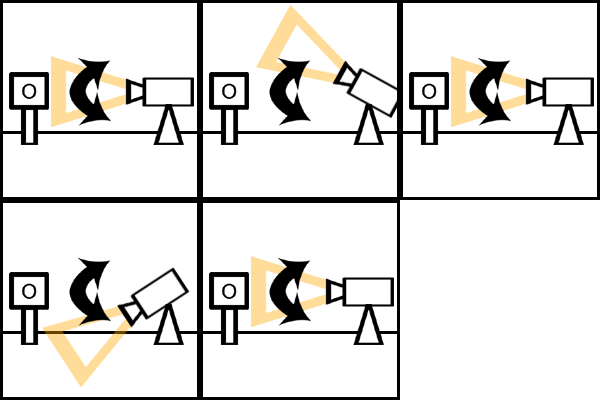
Pedestal Shot - This is where the camera moves up and down without changing its vertical and horizontal axis.

Handheld Camerawork - This is where the camera is held in the operators hand instead of being on a tripod or other base.

The next post will be ... Basic Editing
Monday, 26 September 2016
Expected Production Workflow
When creating media such as a film you
have to follow a workflow and even in the biggest of films they use this to structure what they are going to create. The picture
below shows in order what I think is the best way to create a piece. As well as
that this will help my group and me when it comes to creating the beginning of
our film if we are struggling.
The order of my workflow goes like a
snake from the top left down then up and then back down till it finishes at the
bottom right

The next post will be ... Basic Camera work
Welcome
Hi, my
name is Ben Malpass. I study AS media at Great Wyrley High School and this blog will count to 50% of my total grade for the whole AS.
This will document my journey through my AS Media course.
Thank you for visiting have fun.
The next
post will be ... Expected Production Workflow Exercise
Subscribe to:
Posts (Atom)